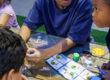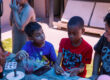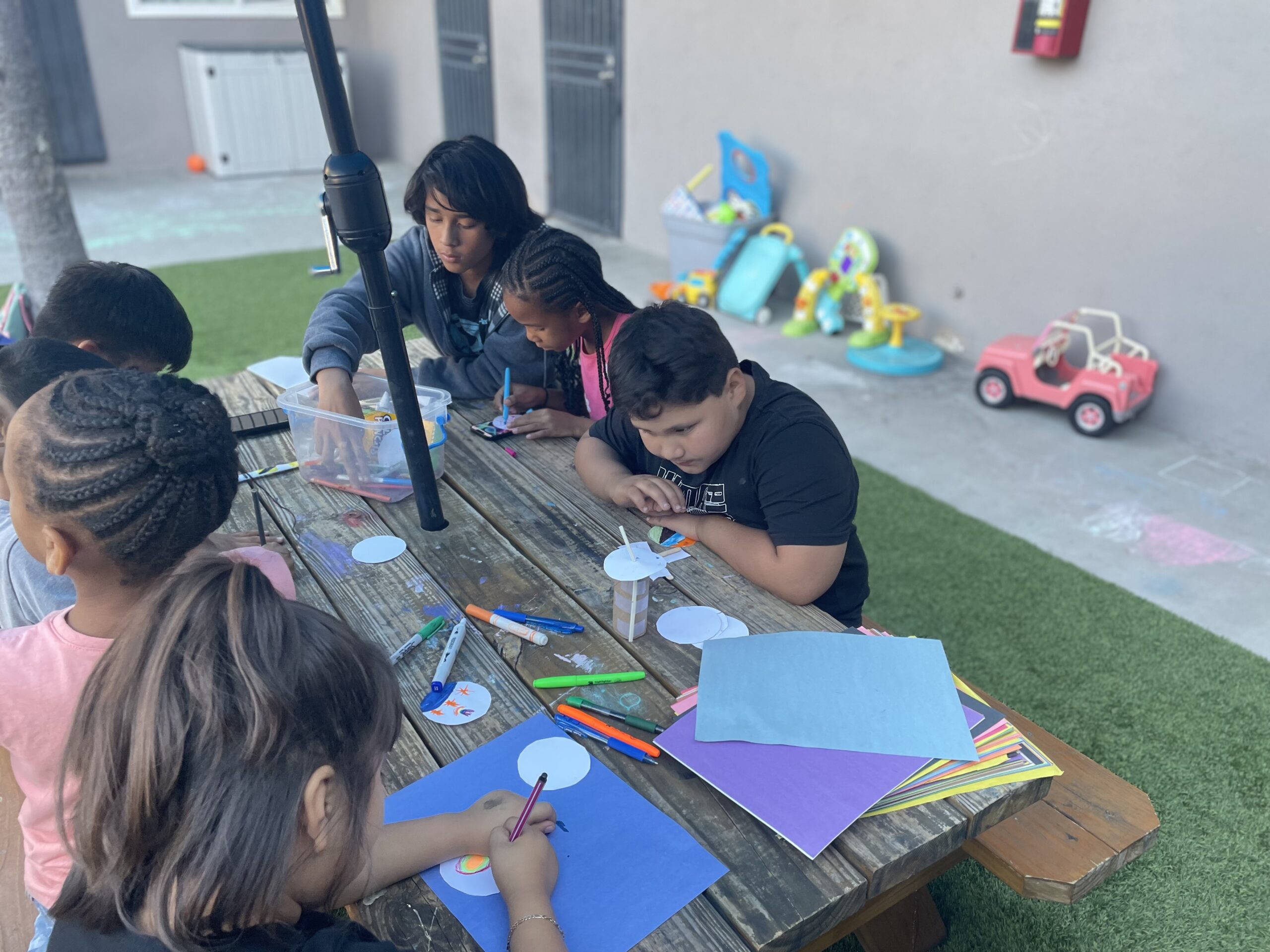
On October 20, 2025, XFYD Westminster hosted a hands-on STEM class at Thomas House Family Shelter, where students explored light, reflection, and symmetry by creating their own kaleidoscopes. About 10 students participated in the activity, combining science and creativity through an interactive and engaging build.
Starting with Curiosity
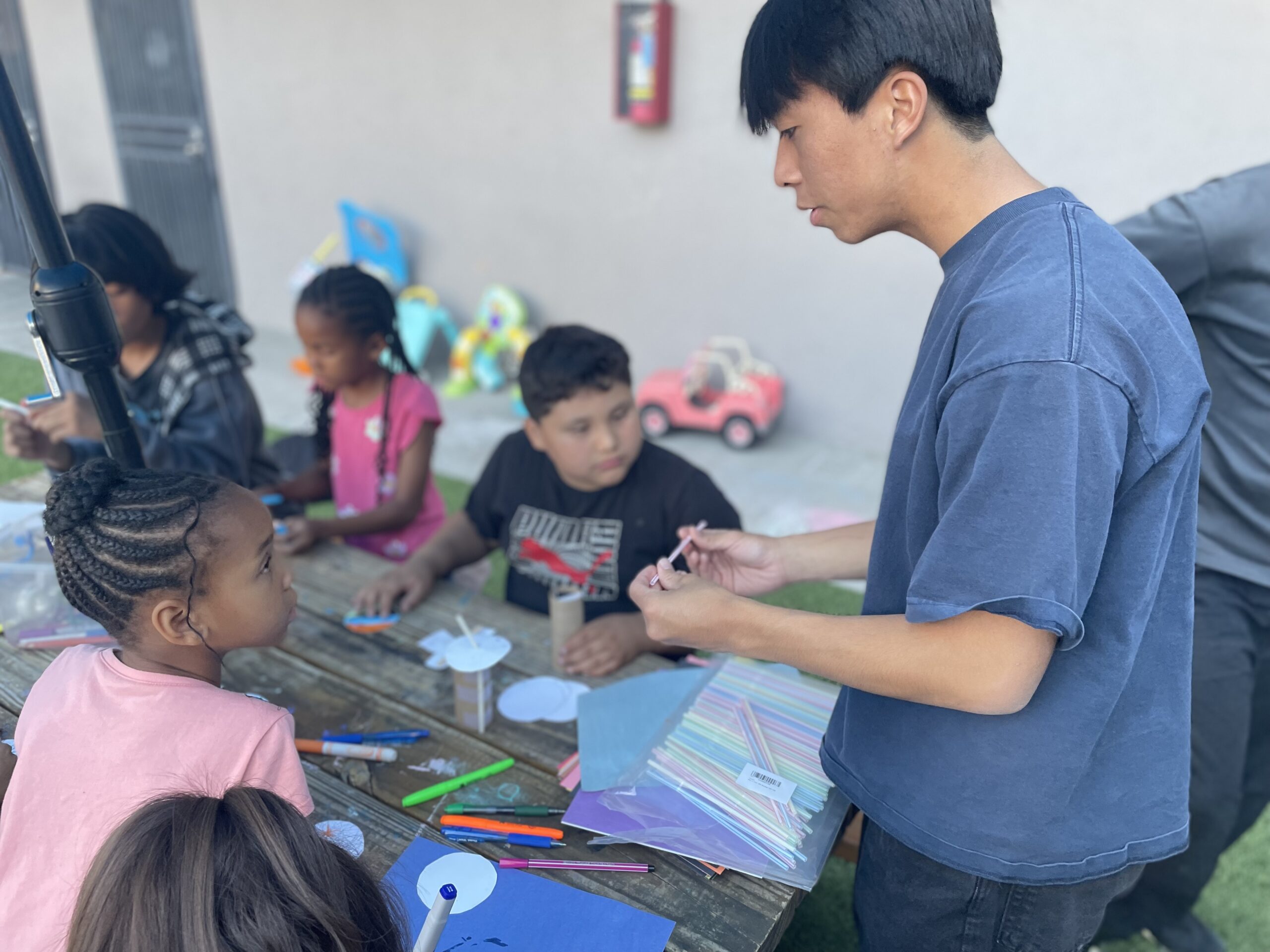
The session began with a brief introduction to kaleidoscopes and how they work. Students were encouraged to think about questions such as how mirrors can create repeating patterns and why shapes seem to multiply when reflected. Volunteers explained that kaleidoscopes are not just toys, but tools that demonstrate real scientific principles related to light and reflection.
Students were shown a completed kaleidoscope before beginning their own, sparking excitement and curiosity about how simple materials could create such complex and colorful designs.
STEM Concepts in Action
Reflection
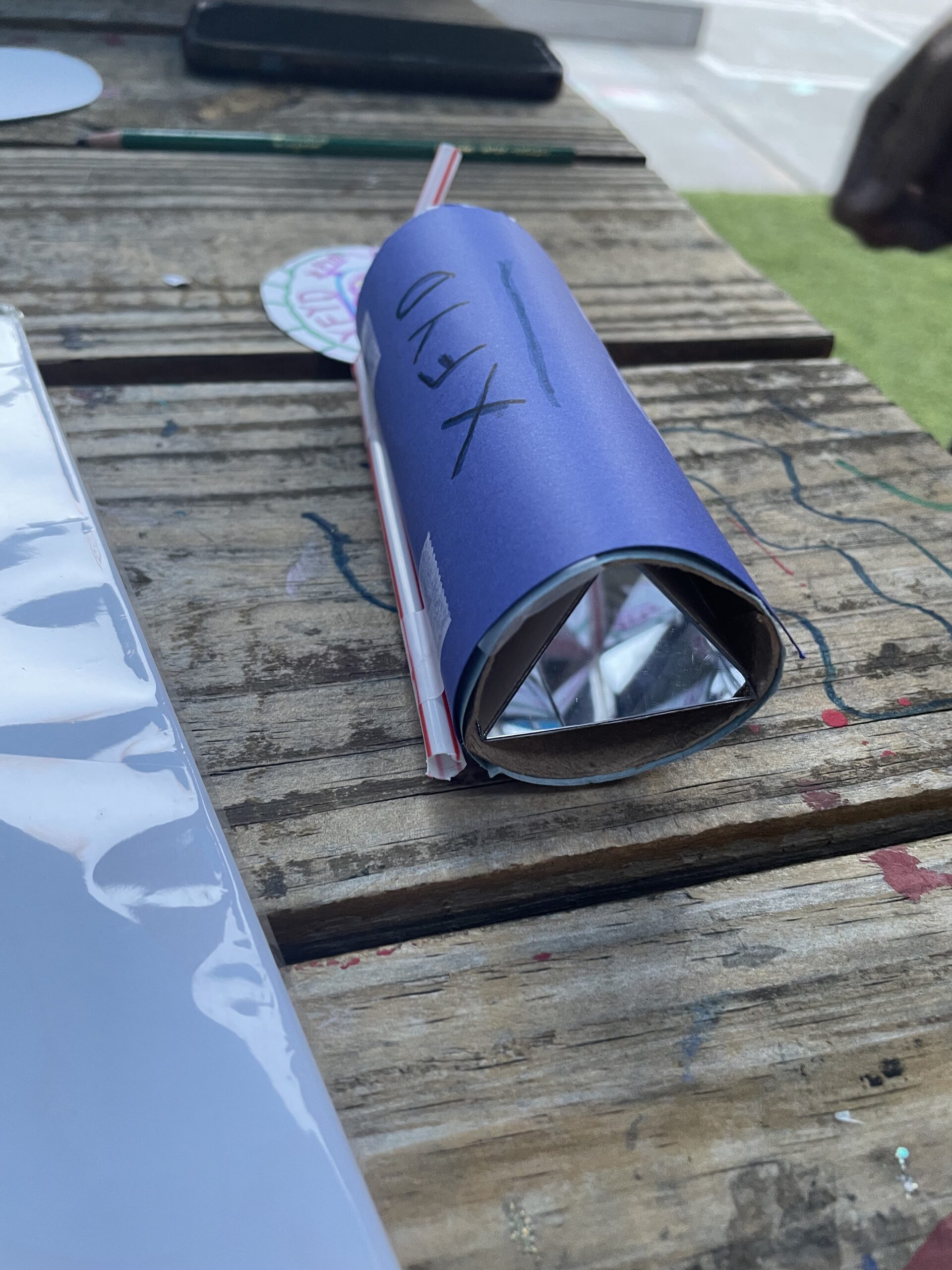
Students learned that kaleidoscopes work using mirrors, which reflect light. When multiple mirrors are placed at angles to one another, they reflect images repeatedly, creating symmetrical patterns.
Light and Color
As light enters the kaleidoscope, it reflects off the mirrored surfaces and the colorful objects inside. These reflections combine to form vibrant, shifting patterns that change as the kaleidoscope is rotated.
Symmetry and Geometry
The repeating patterns seen inside a kaleidoscope are examples of symmetry. Students observed how shapes repeat evenly and discussed how angles between mirrors affect the number and appearance of the patterns.
Cause and Effect
By rotating the kaleidoscope, students saw how small movements caused large visual changes, reinforcing the idea that simple actions can produce different results in scientific systems.
A Lasting Impression
After completing their kaleidoscopes, students eagerly tested them by holding them up to the light and rotating them to observe the changing patterns inside. Each kaleidoscope was unique, reflecting the creativity and design choices of its creator.
The painted CDs were left outside to dry in the sun while the students rotated to other activities. Later, a second group of students joined in to complete their own suncatchers using the remaining materials.