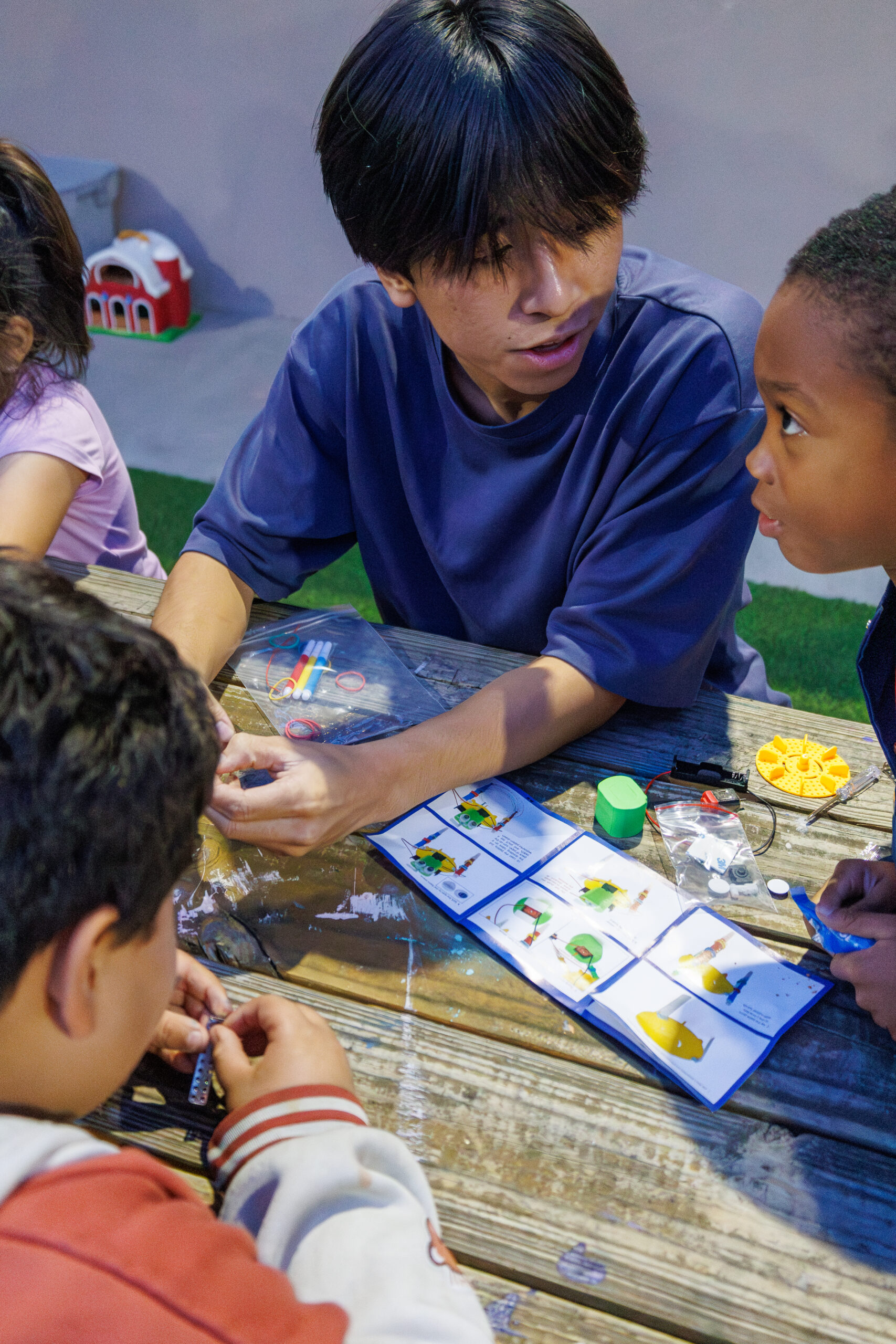
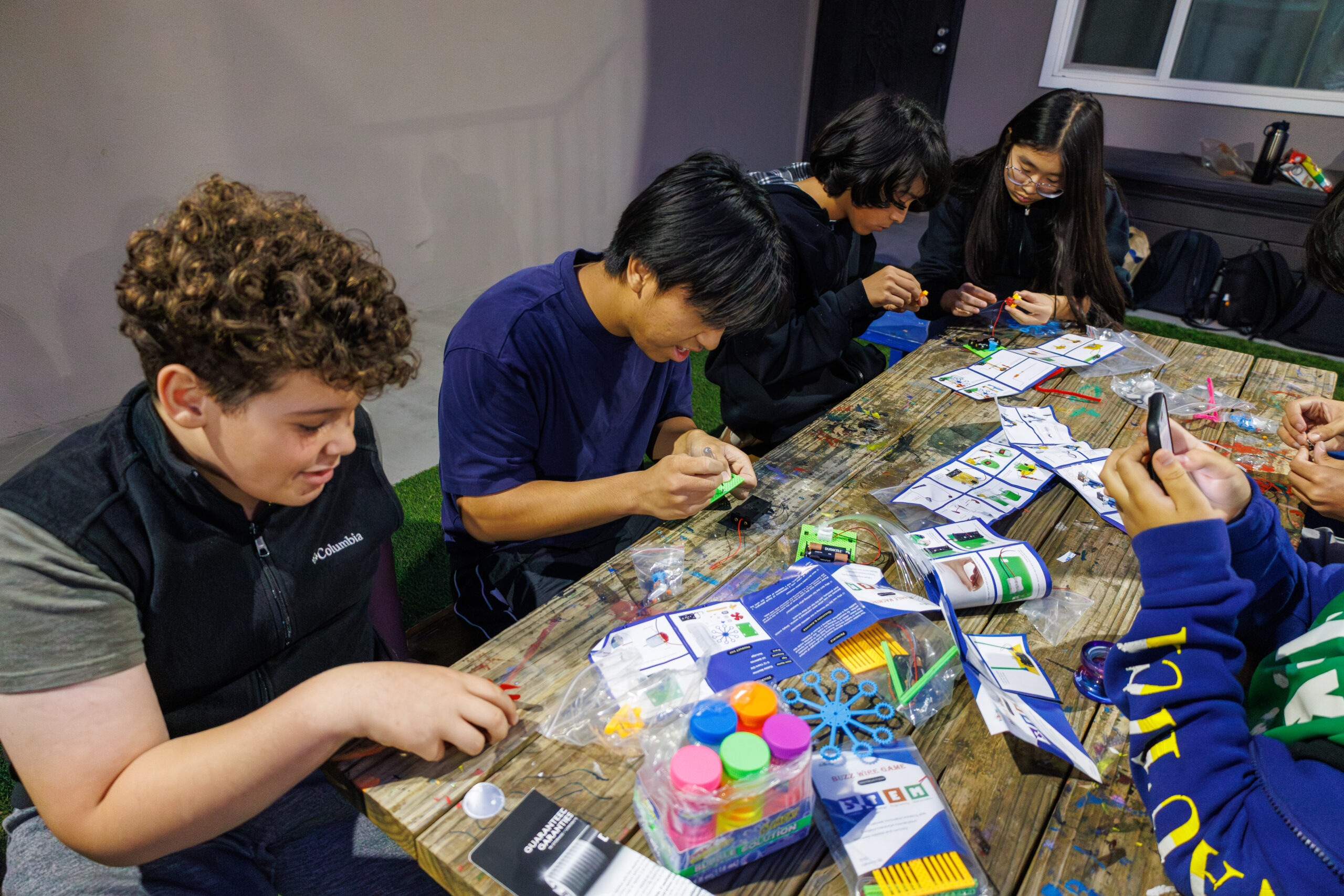
On 12/1/25, XFYD Westminster partnered with Garden Grove High School (GGHS) MESA for a collaborative STEM event at Thomas House Family Shelter, where students explored engineering and problem-solving by assembling fun and technically challenging robotics kits. About 20 students participated, supported by 5 XFYD members and 5 GGHS MESA volunteers, working together to tackle each build.
Getting Started with Engineering
The event began with an overview of the robotics kit components and instructions. Volunteers introduced the students to the different projects included in the kits and explained the importance of patience, careful assembly, and following steps closely. Each kit required the use of tools such as mini screwdrivers, teaching students real-world engineering skills while emphasizing hand–eye coordination and problem-solving.
Students were excited to learn about how different mechanical parts—like gears, axles, and motors—work together to create motion and complete a functional model. Volunteers encouraged students to ask questions and think about how the designs could affect movement, balance, and efficiency.
STEM Concepts in Action
Mechanical Engineering & Gears
The kits featured a variety of mechanical elements that introduced students to gear ratios, rotational force, and motion transfer. Working with gears and moving parts helped students understand how torque and speed change depending on design.
Electrical & Motion Basics
Many builds included small motors and wiring, offering a foundation in electrical circuits. Students assembled motors that powered mechanisms like spinning propellers or walking robot legs, reinforcing how electric energy converts to motion.
Problem-Solving & Perseverance
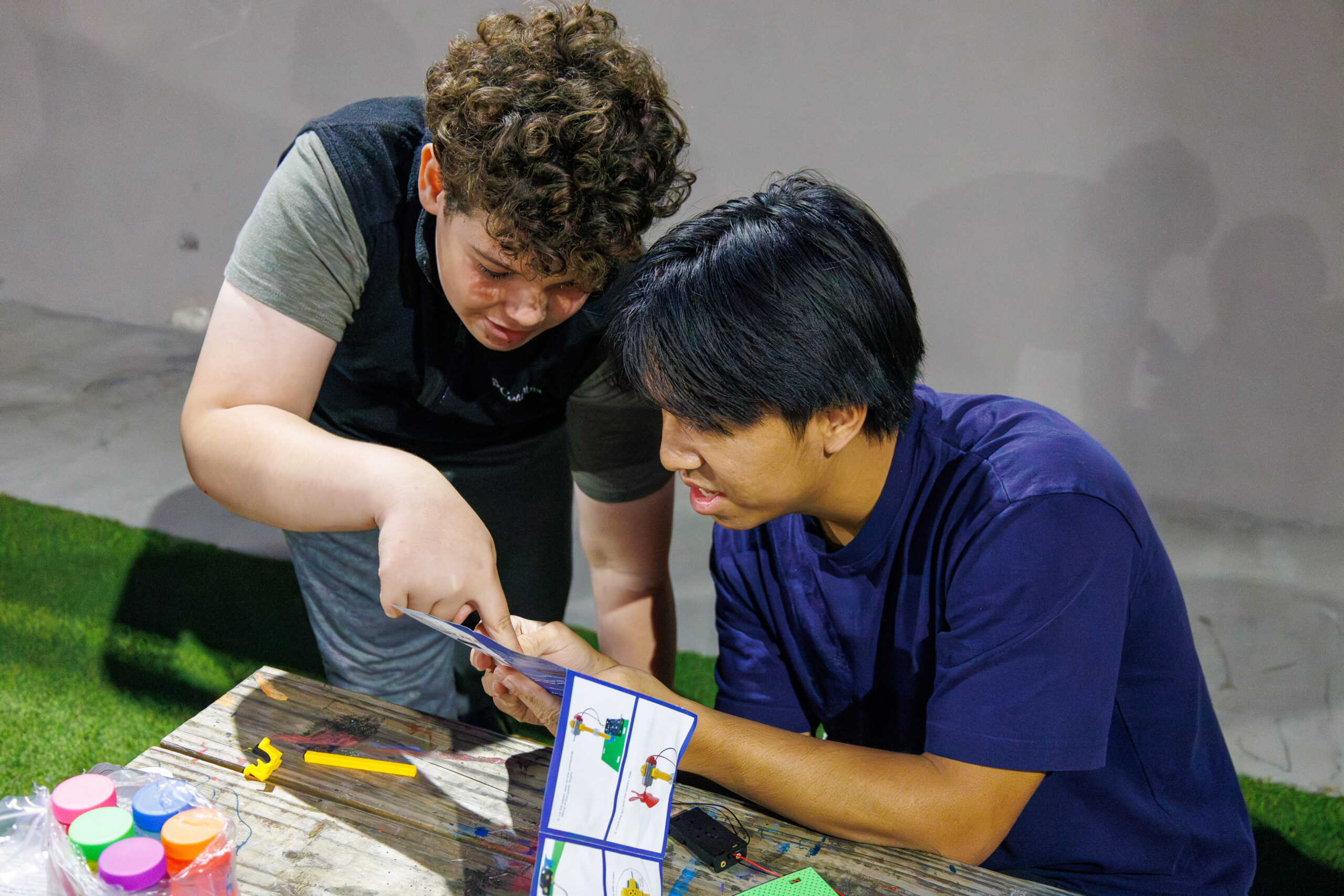
Because the kits were more technically challenging, volunteers worked one-on-one with students, guiding them through tricky steps and offering support without giving answers outright. This fostered independent thinking and persistence—key scientific habits.
Hands-On Engineering Designs
The range of projects gave students exposure to multiple engineering principles:
-
Windmill models that turned with airflow
-
Walking insects that used spinning propellers to mimic locomotion
-
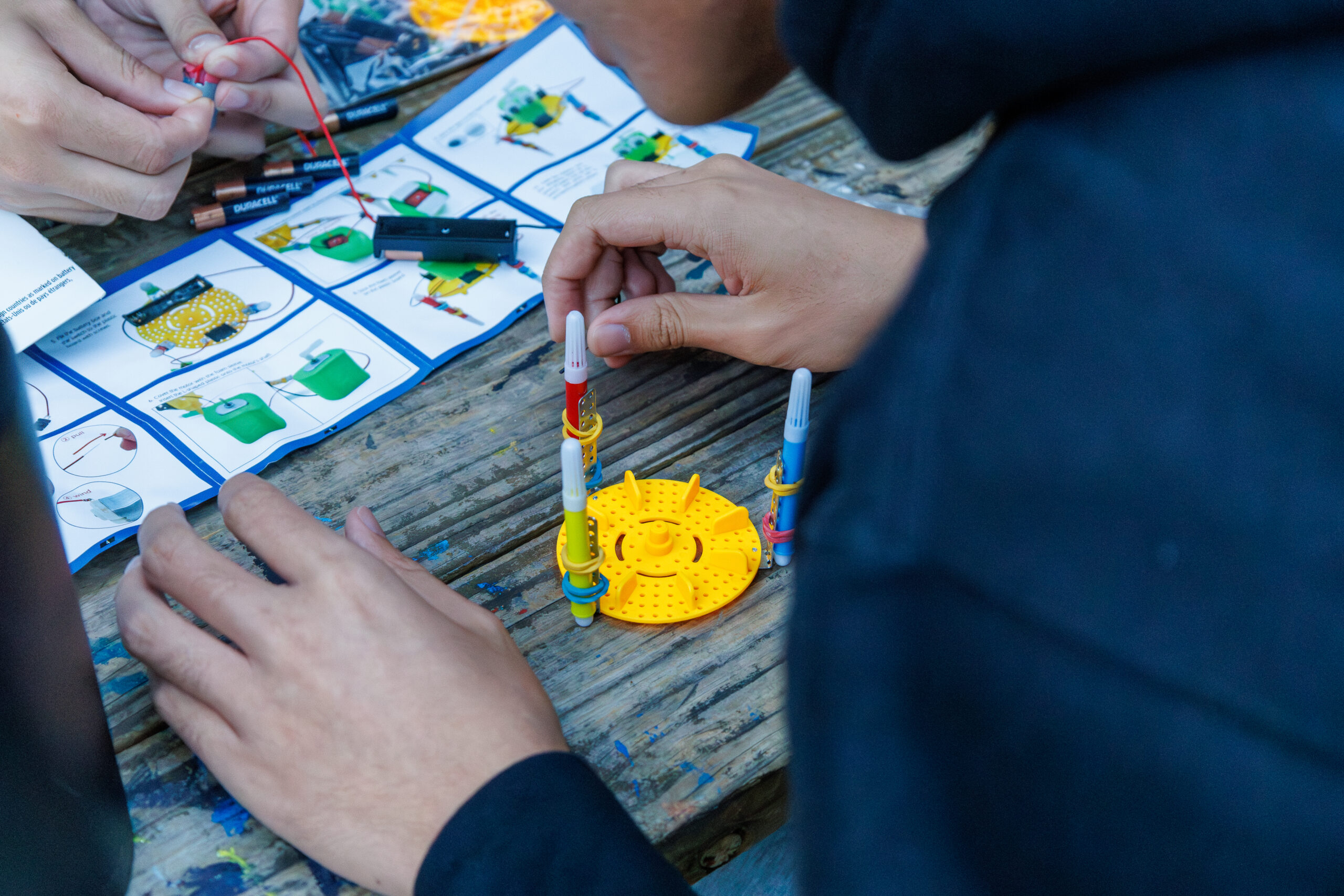
Vibrating drawing machines that used marker legs to create art through motion
Each design offered a different challenge and learning opportunity, showing how engineering isn’t one-size-fits-all but a creative, iterative process.
A Rewarding Finish
As the session continued, every robotics kit was fully assembled, with all materials being used by the end of the event. The kits proved to be technically challenging, requiring careful assembly and the use of screwdrivers. Volunteers worked one-on-one with students throughout the process, helping them troubleshoot, follow instructions, and stay patient as they tackled complex builds such as windmills, walking insects powered by spinning propellers, and vibrating drawing machines that created art using marker “legs.”
By the end of the event, each student successfully completed a STEM kit and was able to keep the project they built, giving them a tangible reminder of their hard work and learning. The activity reinforced engineering skills, perseverance, and problem-solving, while showing students that challenging projects can be completed through focus and collaboration. Students left feeling accomplished and proud of the functional models they created from start to finish.